 SafiLink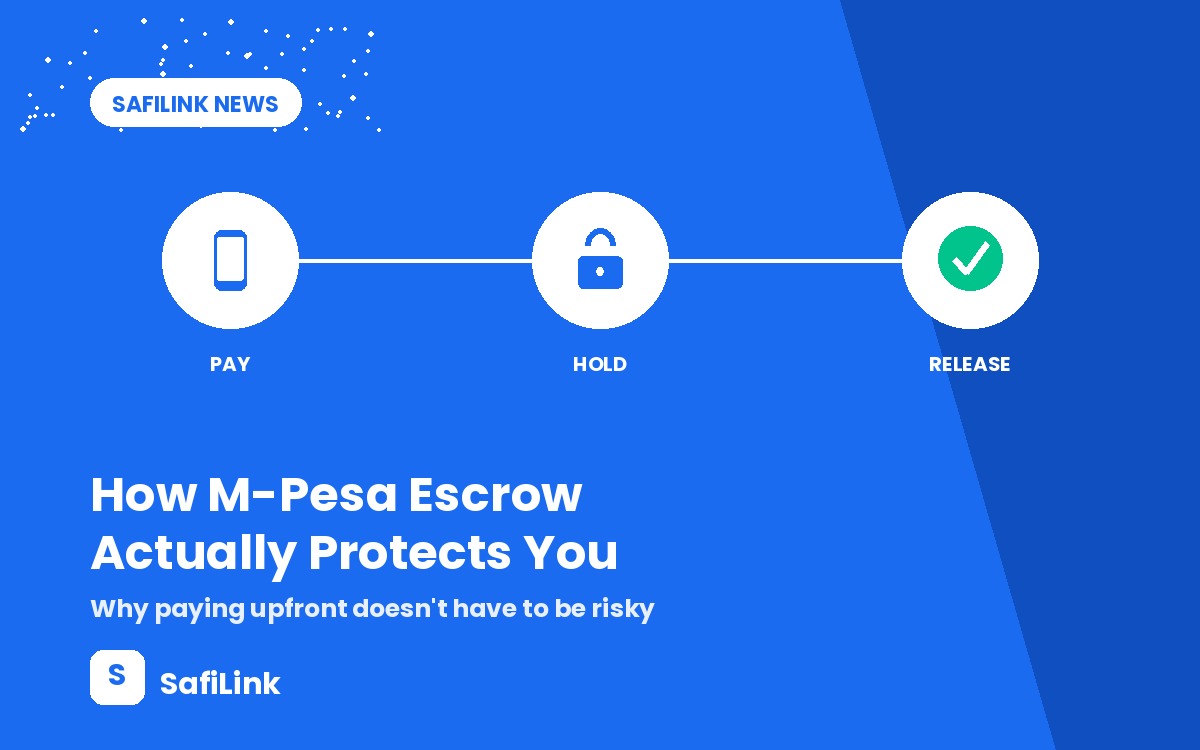
Paying someone before they've done the work has always required a leap of faith. Pay upfront and the person might not show up, or the work might be shoddy with no way to get your money back. Pay only after, and you're asking someone to trust you the same way, with no guarantee either. This is the actual problem escrow solves, and it's worth understanding properly rather than just trusting the word "secure" on a checkout screen.
What escrow actually means
Escrow isn't a payment method, it's a holding arrangement. Instead of your money going directly to the person doing the work the moment you pay, it goes to a neutral third party first, held there until an agreed condition is met. Only then does it get released. It's the same principle behind real estate transactions and large freelance contracts, just applied to everyday home services.
How it actually works, step by step
- You pay via M-Pesa STK Push. The prompt appears on your phone, you enter your PIN, the payment goes through exactly like any other M-Pesa transaction.
- The money doesn't go to the provider yet. It's held in escrow, visible in the job's status, but not accessible to anyone until the next step happens.
- The provider does the work. Cleaning, laundry, whatever the booked service is, tracked through the job status the whole way.
- You confirm the job is done. Only once you actively confirm completion does the payment actually release to the provider's wallet.
- If something's wrong, you dispute it instead of confirming. The payment stays held while the dispute gets reviewed, rather than release happening automatically.
That last step is the part people usually miss: escrow isn't just "pay now, get charged later," it's specifically that your confirmation is the trigger, not the passage of time or the provider marking a job as finished.
Why this protects both sides, not just the client
It's easy to assume escrow is purely a client protection, but it genuinely runs both ways.
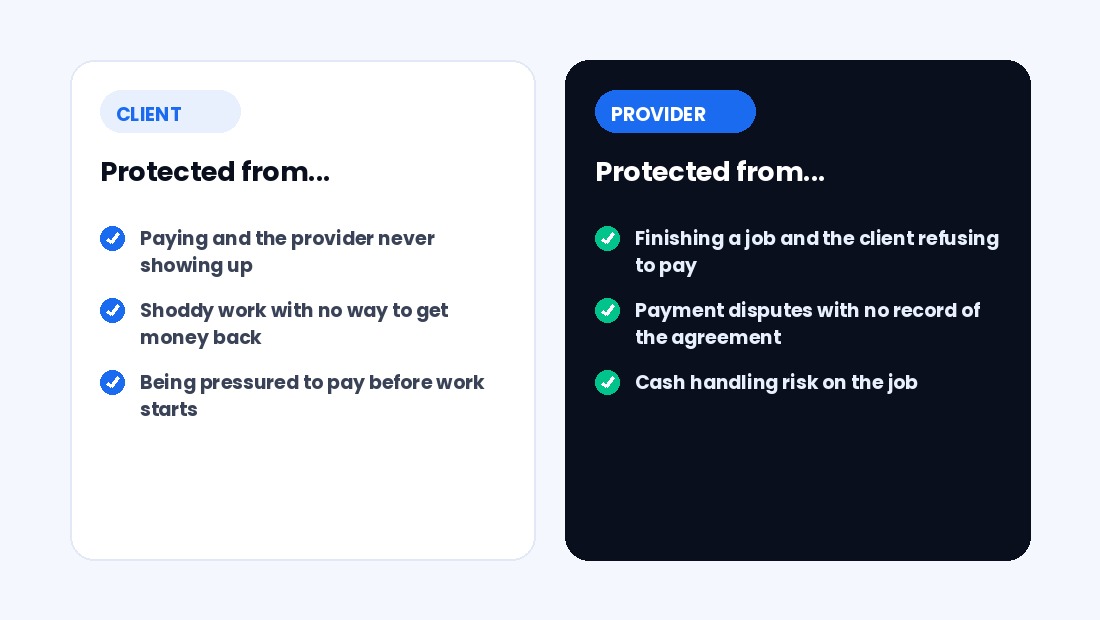
A provider who does the work has a real guarantee the money is already committed and waiting, not dependent on the client's mood or memory after the fact. A client has a real guarantee that payment isn't final until they've actually seen the finished job. Neither side is relying purely on the other's goodwill, the system enforces the sequence.
Where disputes actually go
If a client isn't satisfied, they raise a dispute before confirming, rather than releasing payment and hoping to sort it out afterward. That dispute gets reviewed rather than defaulting to either side automatically, which is a meaningfully different structure from an informal cash arrangement, where a disagreement after payment has already changed hands usually just means someone loses out with no real recourse.
Payment scams worth knowing about generally
Escrow protects the specific transaction inside an app, but it's worth knowing about common M-Pesa scam patterns more broadly, since these show up in all kinds of everyday transactions, not just service bookings.
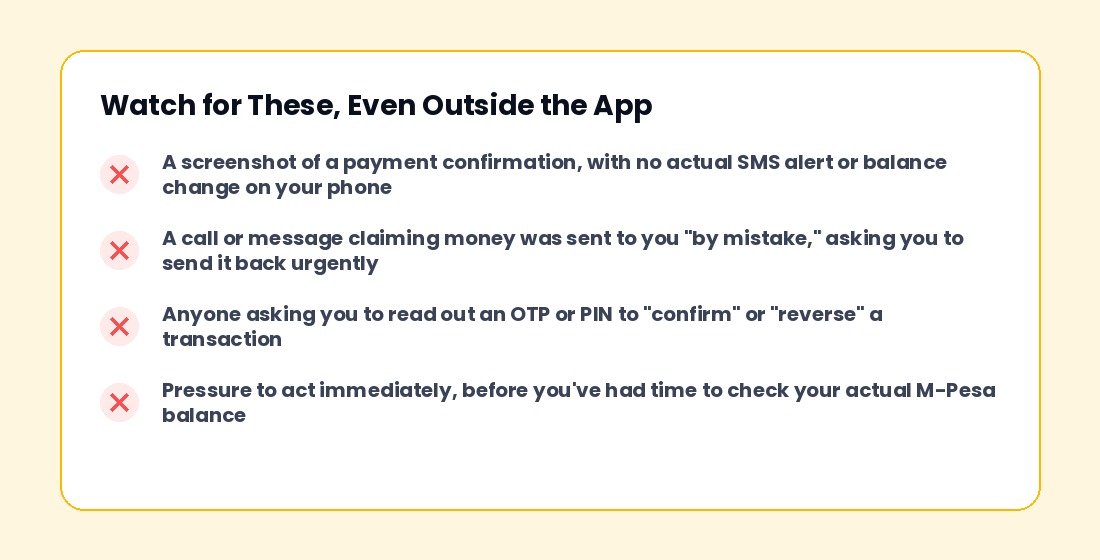
The common thread across all of these is urgency and unverifiable claims, a real M-Pesa payment always generates a real SMS confirmation and a real balance change on your end, not just something someone tells you or shows you a screenshot of. When in doubt, check your own phone's actual M-Pesa menu rather than trusting a screenshot, a call, or a message.
The bigger picture
None of this is really about technology, it's about removing the need for blind trust from a transaction that used to require exactly that. Whether it's a mama fua, a nanny, or any other service booked through SafiLink, the same escrow logic applies: your money is committed, but not released, until you've actually confirmed the work is done. You can see the full booking flow end to end here, or read more about how verification and safety work together across the whole platform.
Paying upfront will probably always feel like a small leap of faith. The point of escrow isn't to remove that feeling entirely, it's to make sure the leap is actually backed by something.
Be the first to comment.