 SafiLink
"Mama fua" has become the everyday term for the woman who comes to wash, clean, and keep a Kenyan household running, and for most families, finding one still happens the same way it always has: a neighbour's recommendation, a relative's contact passed along, someone spotted doing laundry for another house on the estate. It works, most of the time. But "most of the time" is doing a lot of quiet work in that sentence.
Why the informal route carries real risk
There's nothing wrong with hiring through word of mouth in principle, the problem is what happens when it goes wrong. No ID on file means no way to trace someone if property goes missing. No verified emergency contact means no way to reach anyone if there's a dispute or an emergency involving the mama fua herself. No written agreement on pay or hours means disagreements default to whoever remembers the conversation differently. None of this means most informal hires go badly, most don't, but when they do, families discover there was never a safety net to begin with.
What "trustworthy" should actually mean
A lot of people use "trusted mama fua" to mean "someone I have a good feeling about." That's not nothing, but it's not verification either. A genuinely trustworthy hire means someone whose identity has actually been checked against a real document, not just a name they gave you.
Green flags vs. red flags
Some signals are worth paying close attention to before you commit to a hire, formal or informal:
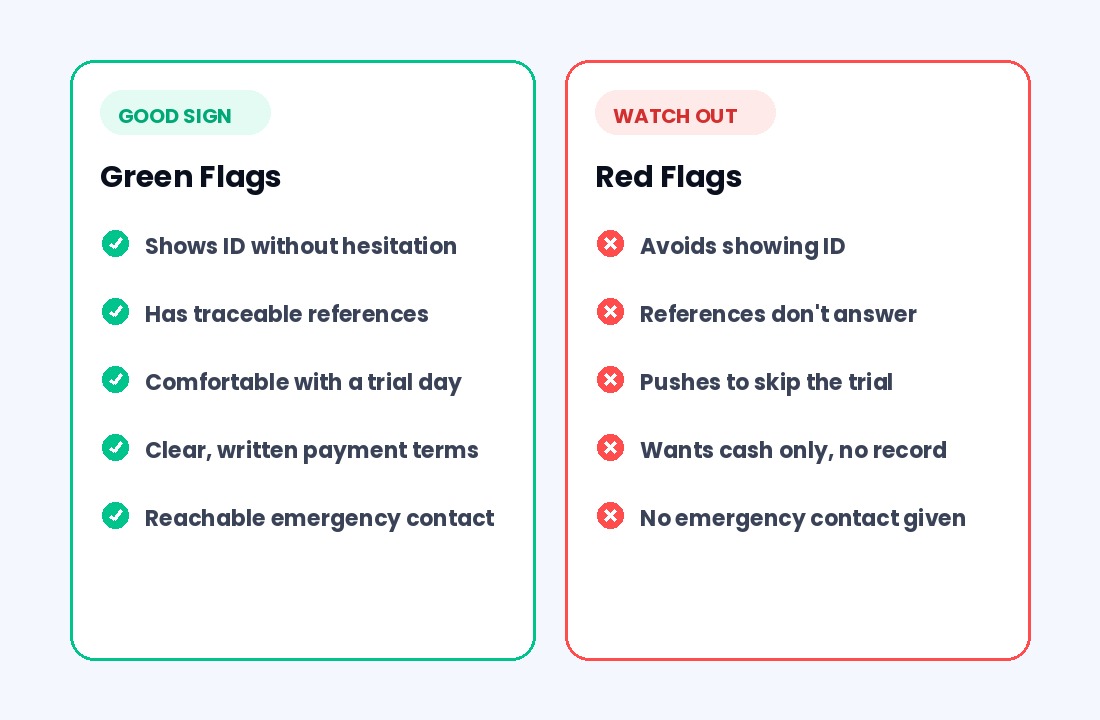
None of the red flags above are proof of bad intent on their own, plenty of perfectly honest people are simply private or informal by habit. But taken together, they're exactly the pattern worth slowing down for rather than waving through because someone came recommended.
What to actually check, step by step
- Ask for a government-issued ID, and actually look at it rather than just asking if they have one.
- Call at least one reference directly. A number on a piece of paper means nothing until you've dialled it and asked real questions.
- Start with a single paid trial day before agreeing to a regular arrangement.
- Get a next-of-kin contact, for their safety as much as yours.
- Agree on pay and schedule in writing, even if it's just a saved text message both sides can refer back to.
Where SafiLink fits in
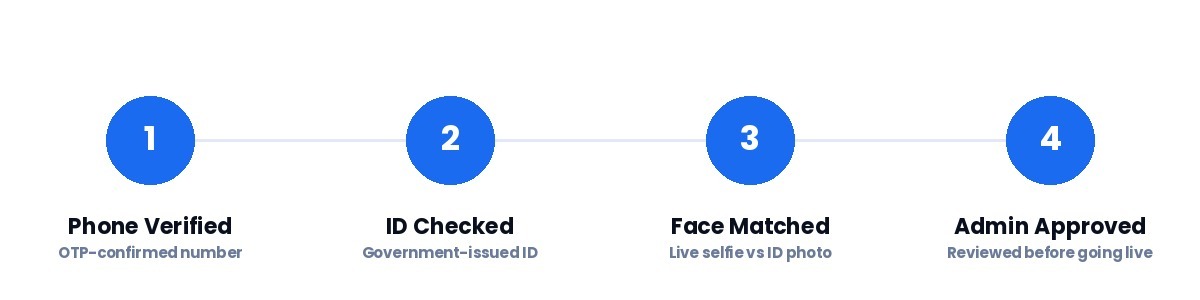
This is exactly the checklist SafiLink automates for every provider on the platform, phone verification, ID upload, a live selfie matched against that ID, and a final manual review, before anyone can accept a single job. It's the same logic as the list above, just handled for you instead of by you, with payment held safely in M-Pesa escrow until the job is actually done.
If you'd rather do this vetting yourself, the steps above work for any hire, through any channel. If you'd rather it happened automatically before you ever meet someone, that's what SafiLink is built for. Either way, the underlying principle doesn't change: verify before you trust, not instead of it.

Be the first to comment.