 SafiLink
Ask five different Kenyan households what a "house help" does versus a "mama fua," and you'll get five different answers. The terms overlap constantly in everyday conversation, which is fine for casual chat but genuinely causes problems when you're actually trying to hire, you end up interviewing the wrong kind of candidate for what you actually need, or agreeing to an arrangement that doesn't match either side's expectations.
This guide breaks down all five common domestic help roles in Kenya, what each one actually covers, how they differ, and what to think about before hiring any of them.
The five roles, explained
Nanny
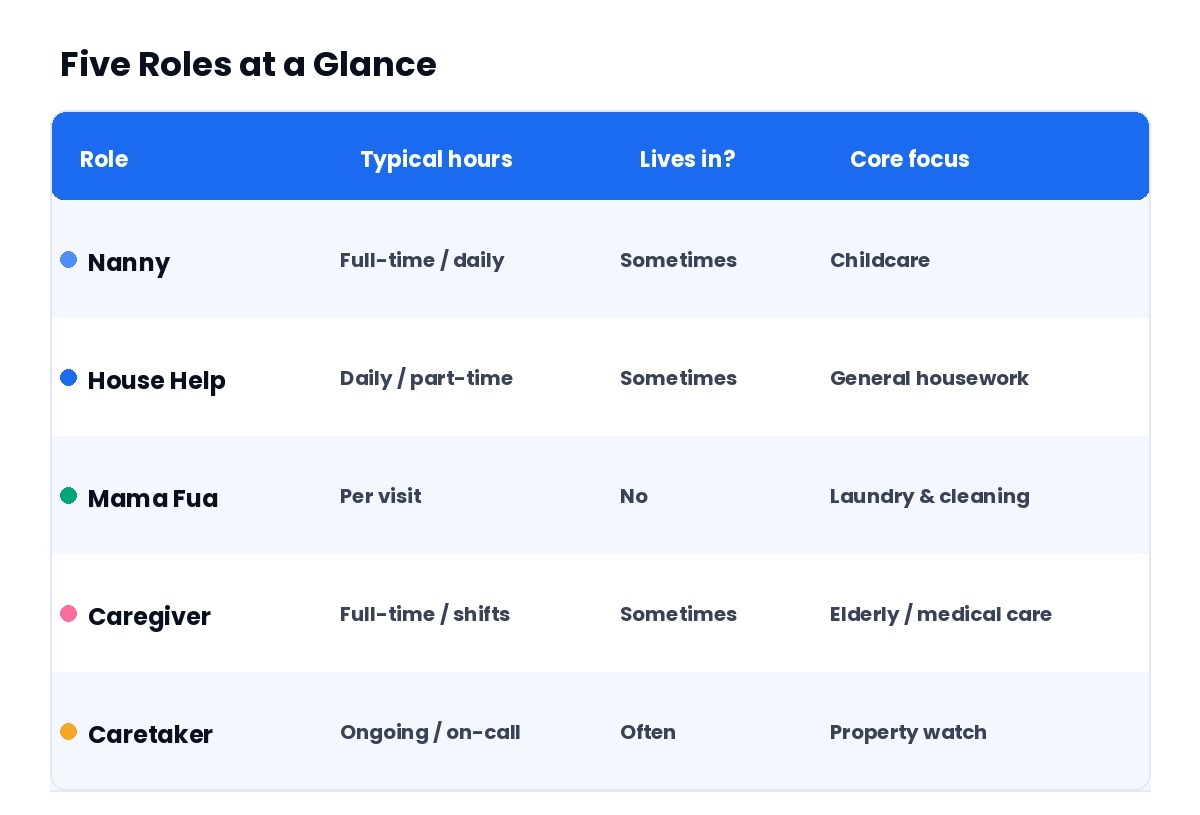
A nanny's core job is childcare, not general housework. A good nanny is judged on how she engages with children, not how spotless the kitchen is. Some nannies are full-time and live in, others work set daily hours and go home. If housework happens, it's usually secondary to actually looking after the children, and conflating the two roles is a common source of friction: hiring someone as "childcare" and then expecting full housekeeping on top, without adjusting pay or expectations, tends to lead to a nanny who feels overloaded and underpaid.
House Help (Domestic Worker)
This is the broadest and most commonly used term, covering general household work: cleaning, cooking, laundry, and everyday upkeep. House help can be live-in or come daily, full-time or part-time. Because the term is so broad, it's worth being specific in any hiring conversation about exactly which tasks are included, cleaning and laundry are very different workloads from cleaning, laundry, and cooking for a family of six.
Mama Fua
Specifically focused on laundry and cleaning, usually hired per visit rather than as a live-in or daily arrangement. A mama fua typically isn't responsible for childcare or cooking, her scope is narrower and more task-specific than general house help. This is also the role most commonly hired informally, through a neighbour's recommendation or word of mouth, which is exactly why verification matters more here than people usually assume.
Caregiver
Focused on caring for an elderly, sick, or dependent family member, sometimes including basic medical or mobility support, medication reminders, help with daily living tasks. This is meaningfully different from a nanny in both skill requirements and emotional weight, a caregiver role often calls for prior experience or training that a general house help role doesn't require. Vetting should go further here too: ask specifically about prior caregiving experience, not just references in general.
Caretaker
Responsible for watching over a property rather than caring for people, common when a house is vacant for extended periods, between tenants, or when the owner travels frequently. Duties usually include basic security checks, managing repairs, sometimes managing other staff on the property. Often an ongoing, lower-frequency arrangement rather than a daily presence.
How to decide which one you actually need
Start from the task, not the title. If the honest answer is "I need someone to watch my kids while I work," you need a nanny, not house help who happens to also mind children. If it's "I need my laundry and floors handled twice a week," that's a mama fua, not a live-in arrangement. Being precise about scope before you start interviewing saves both sides from a mismatched expectation down the line, which is one of the most common reasons these arrangements break down within the first month.
Getting the formal side right
This is the part most informal hiring skips entirely, and it's worth not skipping. For any regular, ongoing arrangement:
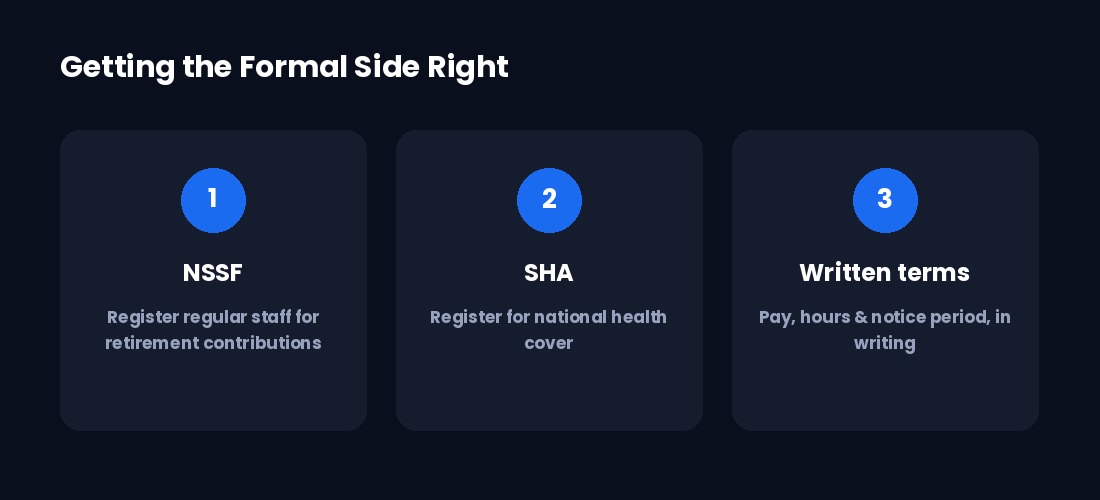
None of this needs to be complicated. A simple written note both sides keep, covering pay, hours, and notice period, resolves the majority of disputes before they start, because there's no ambiguity about what was actually agreed. For anyone hired regularly rather than as a one-off, registering them for NSSF and SHA isn't just a legal formality, it's the difference between a real employment relationship and an informal arrangement with no safety net for either side if something goes wrong.
Vetting, regardless of role
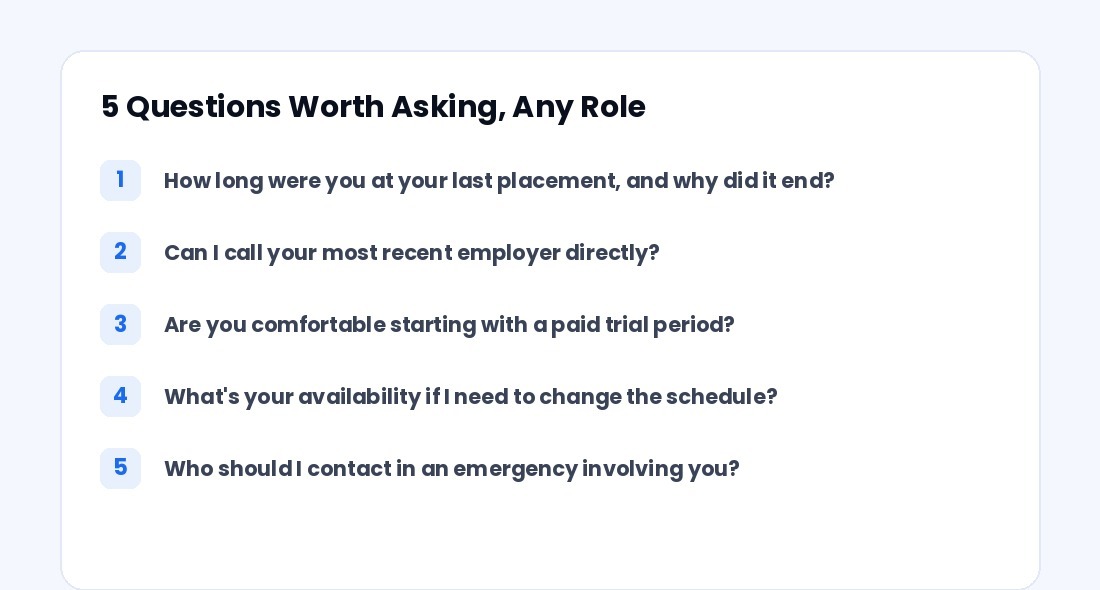
The specific responsibilities differ across all five roles, but the vetting principle doesn't: verify before you trust, not instead of it. That means a real ID check, an actual phone call to a previous reference (not just a name on paper), a paid trial period before committing long-term, and a genuine emergency contact on file. We've written a full checklist for this specifically, it applies whether you're hiring a nanny, house help, or anyone else on this list.
Red flags across every role
A few warning signs apply no matter which of the five you're hiring for: reluctance to show ID, references that don't check out or don't answer, pressure to skip a trial period and start immediately, insistence on cash-only with no written record, or no emergency contact provided at all. None of these alone proves bad intent, plenty of people are simply informal by habit, but together they're worth slowing down for.
A note on cost expectations
Rates vary widely by role, location, live-in versus visit-based arrangements, and experience level, enough that any specific number here would be misleading rather than helpful. What's more useful is the principle: get the rate agreed and written down before work starts, not after, and be wary of a rate that seems unusually low relative to everything else you've heard, it's rarely a sign of a good deal.
Where SafiLink fits
SafiLink currently covers house cleaning, laundry (mama fua), nanny, caregiver, and caretaker services, alongside carpet cleaning, car wash, and more, all through the same verification process: phone confirmation, ID check, live selfie match, and admin review, before anyone can accept a job. Payment sits in M-Pesa escrow until you confirm the work is actually done. You can see exactly how the process works end to end, or browse the full list of services to see which role fits what you actually need.
Whether you hire through an app or find someone the traditional way, the role you need and the vetting you do before they start matter far more than which route you took to find them.

Be the first to comment.